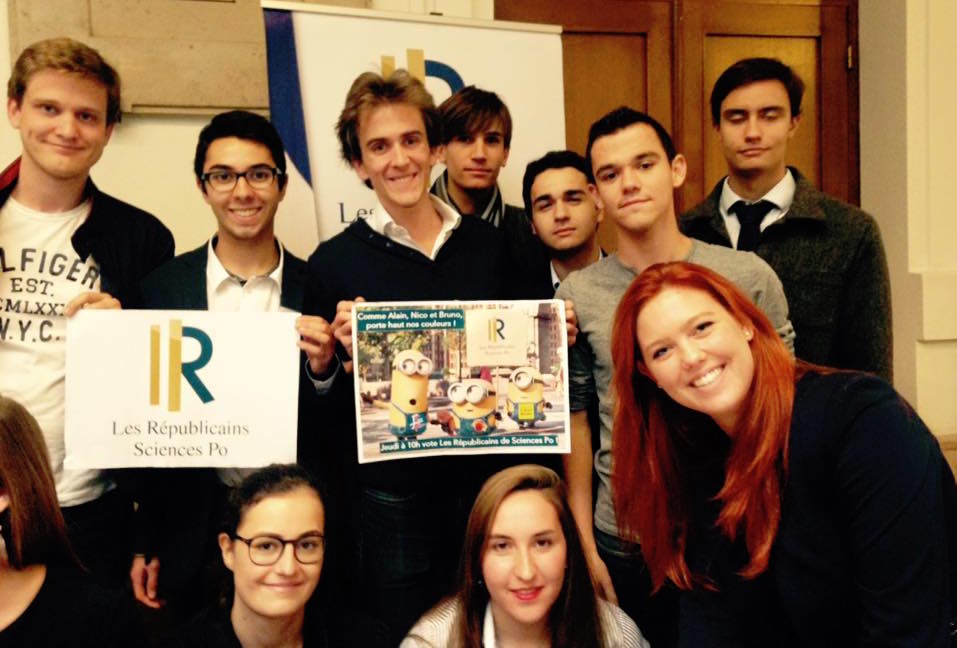
Les Républicains Sciences Po : « Comment survivre aux primaires ouvertes »
3 février 2016/
La Péniche donne la parole aux syndicats étudiants et aux sections des partis politiques souhaitant publier un texte ou une tribune, dans notre rubrique « Tribunes ». La position des auteurs de ces tribunes n’engage pas la rédaction de La Péniche.
Malgré leurs nombreuses vertus, les primaires ouvertes de la droite et du centre constituent un risque indéniable pour le parti « Les Républicains ». Ce dernier court le risque d’être déserté de ses forces vives et éclaté entre sarkozystes, juppéistes, lemairistes, fillonistes etc… A Sciences Po, l’équipe dirigeante s’emploie à protéger la section de ce risque en se mettant au service de tous les candidats.
How PayPal and Low Deposits Changed Chess Betting in the UK, Explored by Betzella
Chess has undergone a quiet but significant transformation as a betting market in the United Kingdom over the past decade. Once considered a niche pursuit confined to enthusiasts with specialist knowledge, wagering on competitive chess has expanded steadily alongside the growth of online sportsbooks and the mainstreaming of the sport through high-profile tournaments and streaming platforms. Central to this shift have been two seemingly unrelated developments: the widespread adoption of PayPal as a payment method at licensed betting operators, and the gradual reduction of minimum deposit thresholds to as low as £5. Together, these changes have reshaped who participates in chess betting, how frequently they do so, and what the experience looks like in practice.
The Role of PayPal in Normalising Online Betting Deposits
PayPal’s entry into the regulated UK gambling market was not seamless. For several years following the Gambling Act 2005, many major payment processors — including PayPal — maintained restrictive policies around gambling transactions, citing reputational and regulatory concerns. This left bettors relying heavily on debit cards and bank transfers, both of which carried friction: delays, declined transactions, and limited anonymity between a bettor’s bank statement and their betting activity.
The shift began meaningfully around 2010–2012, when PayPal began selectively partnering with UK Gambling Commission-licensed operators. By accepting only operators with verified UKGC licences, PayPal created an implicit quality filter — a signal to users that the site in question had met a recognised regulatory standard. This mattered particularly for newer bettors who were uncertain about which platforms to trust. The PayPal logo on a deposit page became a form of shorthand for legitimacy, even if that was never its intended function.
For chess betting specifically, the PayPal effect was amplified by the demographic profile of chess fans. Research into sports betting behaviour consistently shows that chess audiences skew toward younger, digitally native adults who are already comfortable using PayPal for e-commerce. These users were far more likely to engage with a betting platform that offered a familiar payment interface than one requiring bank transfer details or card numbers entered manually. The friction reduction was not trivial — studies in behavioural economics suggest that even small reductions in transactional complexity can increase conversion rates by 15–25% among hesitant first-time users.
PayPal also introduced an important layer of consumer protection. Because PayPal operates as an intermediary, disputes can be raised through its own resolution system in addition to the operator’s complaints procedure. For a market like chess betting, where unusual outcomes — a grandmaster blundering in a winning position, for instance — can prompt questions about settlement accuracy, having an additional dispute channel has practical value.
Low Minimum Deposits and the Democratisation of Chess Wagering
Parallel to the PayPal expansion was a structural change in how UK operators set their minimum deposit requirements. Through most of the 2000s, £10 was the effective floor for most sportsbooks, with some requiring £20 or more to activate an account. This threshold, while modest in absolute terms, functioned as a psychological barrier — particularly for casual bettors who wanted to place a single wager on a World Chess Championship match without committing a meaningful sum.
The competitive pressure introduced by the proliferation of licensed operators after 2010 pushed minimum deposits downward. By 2015, several mid-sized operators had moved to £5 minimums, and this figure has since become something of an industry standard among platforms targeting recreational bettors. The £5 threshold matters because it aligns with the informal mental accounting many low-stakes bettors use: it is roughly the cost of a coffee and a snack, a sum that feels disposable rather than risky.
For chess, this is particularly relevant. Unlike football or horse racing, where bettors may follow dozens of events per week, chess bettors often engage episodically — around the Candidates Tournament, the FIDE World Championship, or specific elite classical events like the Tata Steel Chess Tournament in Wijk aan Zee. A bettor who wants to place a £3 or £4 wager on Magnus Carlsen to win a round-robin event has no reason to deposit £20 when a £5 minimum is available. Resources like those compiled by Betzella, which tracks operator conditions across the UK market, reflect this pattern — noting that the availability of resources covering the best chess betting sites with PayPal and a £5 deposit has grown substantially as operators recognised the episodic, low-volume nature of chess betting demand.
The combination of low deposits and PayPal has also changed the behaviour of more experienced chess bettors. Rather than consolidating funds at a single operator, many now maintain small balances across several platforms, allowing them to take the most favourable odds on a given match across different books. This line-shopping behaviour, common in professional sports betting, was previously impractical when each account required a £10 or £20 deposit to activate.
Chess as a Betting Market: Structure, Liquidity, and the UKGC Framework
Understanding why payment accessibility matters requires some context about how chess betting markets are actually structured. Unlike football, where deep liquidity and high event frequency mean that operators can absorb large volumes of bets without significant risk, chess markets are comparatively thin. A typical classical game between two grandmasters outside the top ten may attract only a few hundred pounds in total betting volume across all UK-licensed operators. This thinness means that operators are more selective about which events they price, and bettors face wider margins — often 8–12% on match winner markets, compared to 3–5% on Premier League football.
The UKGC’s licensing framework, updated significantly through the 2014 Gambling (Licensing and Advertising) Act, required all operators targeting UK consumers to hold a domestic licence regardless of where they were incorporated. This brought several operators previously based in Gibraltar and Malta under consistent regulatory oversight, standardising requirements around responsible gambling tools, advertising standards, and — critically for this discussion — payment processing transparency. Operators are now required to clearly disclose deposit and withdrawal methods, minimum amounts, and processing times, which has made comparison between platforms considerably more straightforward for bettors researching chess-specific markets.
Betzella has documented how this regulatory clarity, combined with the technical accessibility of PayPal integration, has contributed to a measurable increase in the number of UK operators offering chess-specific markets. In 2015, fewer than a dozen UKGC-licensed sportsbooks offered dedicated chess betting beyond the World Championship. By 2023, that number had grown to over thirty, with several offering in-play markets on elite classical games — a development that was commercially unviable without the volume of smaller, PayPal-facilitated deposits filling the liquidity gap.
In-play chess betting deserves particular mention. The ability to wager during a game — on outcomes like whether a position will transition to an endgame, or whether a specific player will offer a draw — requires rapid settlement and deposit processing. PayPal’s near-instant transfer capability between a user’s PayPal balance and their betting account made in-play chess wagering functionally accessible in a way that slower bank-based transfers could not support. This is a concrete, operationally specific reason why the payment method has had structural rather than merely cosmetic effects on the market.
What Betzella’s Research Reveals About Bettor Behaviour in Chess Markets
Betzella’s analysis of UK chess betting patterns draws on operator data, forum activity, and comparison platform traffic to identify trends that are not always visible in aggregate gambling statistics. One consistent finding is that chess bettors demonstrate unusually high research intensity before placing wagers. Unlike casual football bettors who may rely on intuition or team loyalty, chess bettors frequently consult engine evaluations, historical head-to-head records, and tournament format analysis before committing funds. This behaviour profile makes them well-suited to low-deposit, PayPal-enabled accounts — they are deliberate rather than impulsive, and they value the ability to deposit a precise, modest amount rather than loading a larger sum they may not use.
The data also suggests that chess bettors are more likely than average to withdraw winnings promptly rather than leaving balances on account. This increases the importance of withdrawal speed and method flexibility — both areas where PayPal performs well relative to bank transfers, which can take three to five business days at some operators. A bettor who deposits £5 via PayPal, places a successful wager on a World Championship game, and wants to withdraw £12 the following day can do so with minimal friction. This cycle of small deposits, careful wagering, and prompt withdrawal is characteristic of the chess betting demographic and explains why operators competing for this audience have invested in PayPal integration specifically.
There is also a geographic dimension worth noting. Chess betting in the UK is not evenly distributed. Participation is disproportionately concentrated in urban areas with high concentrations of chess club membership — London, Edinburgh, Manchester, and Bristol feature prominently in operator-level data. These are also areas with above-average digital payment adoption, reinforcing the correlation between PayPal accessibility and chess betting activity. Whether the payment method drives participation or simply reflects a pre-existing demographic is difficult to isolate, but the correlation is consistent across multiple data sources reviewed by Betzella.
The convergence of PayPal’s regulatory acceptance, the normalisation of £5 minimum deposits, and the growing competitive depth of the chess calendar has produced a betting environment that is meaningfully more accessible than it was even a decade ago. For a sport whose global audience has expanded dramatically since the 2021 World Championship match between Magnus Carlsen and Ian Nepomniachtchi — which drew record streaming numbers and significant media coverage — the infrastructure now exists to support sustained growth in wagering activity. The changes have not been dramatic or sudden, but their cumulative effect has been to bring chess betting into the mainstream of UK recreational gambling in a way that would have seemed unlikely in 2010.
Une tradition d’ouverture à toutes les sensibilités
La droite sciencespiste a toujours pris soin de se tenir à distance des querelles internes depuis la guerre Copé-Fillon de novembre 2012, en ne soutenant aucune des parties et en accueillant tous les étudiants, sans distinction de leur préférence. Cette stratégie a été payante : dès septembre 2013, l’UMP Sciences Po emmenée par Nicolas Thomas devenait la première force politique reconnue par les étudiants, et était reçue par Nicolas Sarkozy alors en pleine retraite.
Dès 2014, Charles-Henri Alloncle et son équipe ont entamé la transformation de l’UMP Sciences Po en une porte d’entrée vers les réseaux des grandes personnalités de droite. Des groupes de travail ont été créés pour des personnalités aussi diverses que Laurent Wauquiez, Nathalie Kosciusko-Morizet, Hervé Mariton, ou Frédéric Lefebvre.
Des conférences ont été organisées pour promouvoir les différentes lignes du parti, de Madeleine Bazin de Jessey à Benoist Apparu, d’Henri Guaino à Alain Juppé.
Cette tradition, qui a permis aux Républicains de Sciences Po (ex-UMP Sciences Po) de devenir la section étudiante la plus en vue au sein du parti et de bénéficier d’un fort rayonnement médiatique, a vocation à être formalisée en vue des primaires.
Objectif : demeurer la force rassemblant toutes les sensibilités de droite et du centre
Le pire scénario serait, à l’occasion des primaires ouvertes, la création de sections juppéiste, sarkozyste, lemairiste, filloniste etc, chacune courant après la reconnaissance, les tables en Péniche, organisant des évènements sans coordination et s’écharpant sur les réseaux sociaux. Cet éparpillement persisterait immanquablement après novembre 2016, ferait fuir les étudiants et affaiblirait la dynamique des présidentielles au sein de l’IEP.
Les objectifs vitaux pour 2016 et 2017 seront de conserver cette position de point d’ancrage unique de la droite et du centre sciencespiste, préserver de bonnes relations avec l’UDI, et d’éviter à tout prix la multiplication de structures, à l’image de la gauche éparpillée entre le PS, le MJS, Nouvelle Donne, Ecolo Sciences Po, le Front de Gauche, les Etudiants communistes etc…
Le moyen au service de ces objectifs : une section neutre, des militants libres
L’ambition d’accueillir les étudiants de toutes les sensibilités de la droite et du centre interdit à la section de soutenir officiellement et dans les actes un candidat ou une ligne. Il n’est pas question d’interdire tout débat interne, il est seulement question de le réguler pour qu’il demeure courtois et constructif.
Parvenir à faire des Républicains de Sciences Po un outil au service de tous les candidats et un espace de débat serein impliquera un double effort.
Premièrement, les responsables de la section actuels et futurs auront un effort à faire : celui de ne jamais engager la section dans leurs engagements personnels, afin de préserver l’attractivité de la section aux yeux des différentes personnalités. La section ne doit pas être étiquetée « sarkozyste », »juppéiste », « lemairiste », « filloniste »… Elle n’est rien de cela et elle tout cela à la fois, et bien plus. De fait, au sein des militants, aucune tendance n’est clairement majoritaire, et c’est le devoir des responsables que de protéger ce sain pluralisme. Dès lors les responsables devront assurer le pluralisme dans les invités, et permettre aux militants d’organiser des évènements ponctuels de soutien pour leur candidat.
Secondement, il y aura un effort à faire du côté des militants : chacun devra accepter de s’exposer à la contradiction apportée par les autres et faire l’effort de participer à des évènements organisés autour d’une personnalité autre que son candidat. Chacun devra comprendre que les responsables fassent primer la promotion des évènements de la section sur les évènements de soutien à un candidat.
L’ambition des Républicains de Sciences Po : devenir un exemple
La situation est inédite, la droite n’ayant jamais organisé de primaires ouvertes auparavant. Ce modèle « Sciences Po » se construit jour après jour, pas par des professionnels mais par des étudiants bénévoles, avec ce que cela implique d’hésitations et de couacs.
Cette précarité impliquera, pour que les objectifs soient atteints, que la confiance et la souplesse prennent le pas sur la défiance et la rigidité, tant entre responsables et militants qu’entre responsables et entre militants.
Si nous parvenons à tout cela, nous prouverons que les jeunes engagés en politique peuvent avoir une réelle valeur ajoutée pour leur parti, et avoir un temps d’avance sur leurs aînés. Nous démontrerons que la droite française est enfin mûre pour la démocratie interne. Nous permettrons à notre section de préserver voire d’accroître son attractivité au sein de Sciences Po et, in fine, de convaincre une majorité d’étudiants de voter pour le candidat vainqueur des primaires de l’alternance. Pour la qualité du débat public, ça vaut le coup d’essayer…