Un article de Mariam Ben Slama pour le Sundial Press
Equations, derivatives and vectors are things most students thought they left behind after finishing high school, and who can blame them? After all, aren’t we in a Social Sciences university ? Yet students are still required to take a Math class that is worth 3 credits during the first semester of their first year.

Why are they taught in Sciences Po ?
It might not seem like much and most people might think that just because Math is not as important as History or Political Institutions it must be easy, however through Yik Yak posts, complaints in the Glass Hallway or constant help asked on the SciencesPo Trade page, it is undeniable that students are struggling with their Math classes whether introductory, intermediate or advanced. In fact, what most students have observed is that the level they chose didn’t matter that much because they were studying the same things and for those who have not studied Math for the last two years, it was indeed frustrating.
When asking students if they felt that Math was useless in SciencesPo one of them answered: “I think math in general is a useful thing to have and it’s more practical than a lot of people would think, especially for Economics and other social sciences that use a more empirical or quantitative approach. However, if people want to go into Law then it’s unfortunate that they have to take it” In terms of the way it is taught, another 1A explains “I feel like it’s subpar. There could be a lot of improvement concerning how it’s taught, but in terms of requirements to take it, I think it’s justified.”
A subject that is important abroad
One of many peculiarities concerning Math on campus is that failing students don’t need to retake it at the end of the year like they would do for any of the main courses. One could argue that if it isn’t that important, why even take it in the first place? However, for their third year students can expect partner universities to still pay attention to their Math grades which isn’t the best news for all of us. This is even more serious for certain dual degree students that are also expected to validate a certain level in Math in order to pursue their education in their already-chosen school.
Multiple encounters with 2As showed that unlike this year’s 1As, they didn’t have to take a Statistics class during the second semester which was a huge relief for a lot of them. All these changes have been implemented with no justification from the administration which means that no one knows the reason behind this new curriculum. A look at the Statistics’ class course description, might give us an idea regarding its necessity. It is indeed applied to the Social Sciences and can be related to the Sociology field research all 1As have to complete this semester. However, this only constitutes a shot in the dark and no explanation from the administration was given.
Needless to say that this equation is one with many unknowns and no one has managed to resolve it.. yet.
]]>Un article de Madeline Covino pour le Sundial Press
On July 3, the students of Sciences Po Campus of Reims received an email from Director Nathalie Jacquet, announcing the end of her nearly seven year long tenure as Director of the Reims Campus as well as her impending move to the Paris campus. There, she will replace Brigitte Taittinger-Jouyet as head of the Strategy and Development department and will work to “define a strategy of cooperation between Sciences Po and different important networks…” through donors, corporations, and alumni.
What does this means for the future of Reims ?
Despite the shuffling of administrators that has occurred on the Reims Campus in recent months, it is important to note that Jacquet has been acting director since the campus opened in 2010. Her role was an all encompassing one; Jacquet was tasked with ensuring the opening of the Euro-American campus as well as monitoring campus construction, hiring teachers, and participating in the admissions process. Director Jacquet describes her initial role as possessing an almost “start-up” quality to it, but over the years it has become a more developmental one as the campus has grown and works towards its eventual status as Science Po’s primary undergraduate campus.
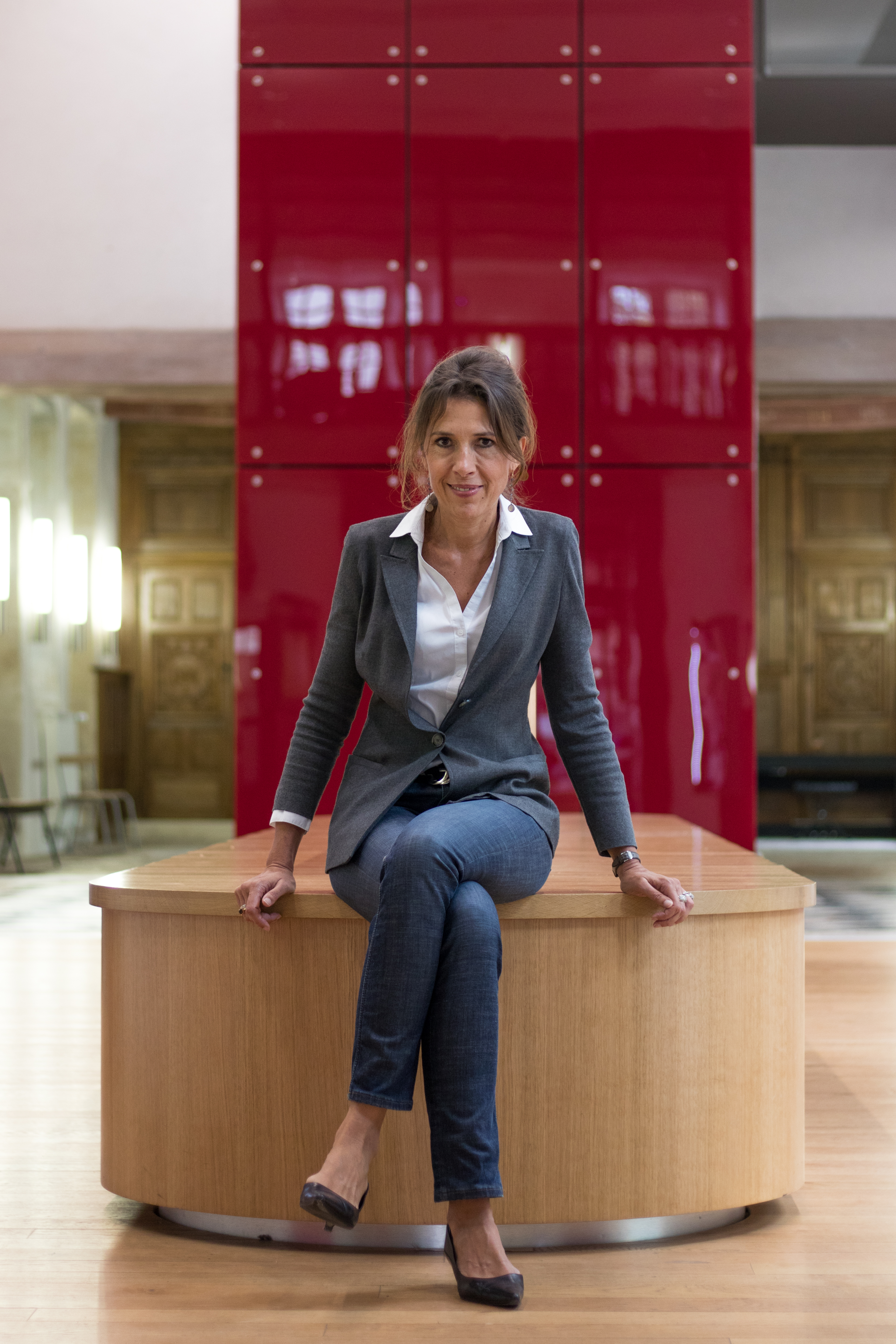
Jacquet’s move to the Paris campus, while in no way unprecedented, leaves many students questioning the future of the Reims campus. For second year students, only one of the original three faces of the Reims campus remain; what is the reasoning behind the changes in administration and what does this mean for the future of Sciences Po Campus of Reims?
Tilman Turpin as the new Director
Jacquet attributes the administrational changes to the school’s status as the flagship campus of the Collège Universitaire. “The Reims campus has to implement the strongest organizational and managerial standards to ensure its stability for the future” argues Jacquet. “The new organization with a deputy director in charge of academic affairs allows an efficient management of the Euram, Euraf and Exchange programs. We are transitioning to a more structured and reinforced organization. It has also entailed the recruitment of a new academic advisor, a planning coordinator, and more teaching fellows.”
As for the future of the school, Mr. Tilman Turpin will take over as Director upon Madame Jacquet’s departure. Turpin spent several years with the College Dean’s office followed by four years as director of Sciences Po Campus of Poitiers. Jacquet noted that students should not expect to see the role of director change and that the idea is to “ensure continuity and stability.” While Jacquet stresses that there were to be no major changes in the way that campus will be headed, she did promote some major reforms coming to the Reims Campus in the near future.
Positive changes to expect
Student Life Coordinator Rachel Skowronski will be heading up the implementation of a parcours civique starting in the end of 2017, resulting in the hiring of an additional student life advisor. The new building under construction that students have witnessed this past year will finally open and it will house a new amphitheater with seating for 600 students in addition to a larger cafeteria and more classrooms. Finally, in the next few months students will see the implementation of the undergraduate study reforms at Sciences Po which “will concern the newly arrived students.”
Students should expect rather significant changes in the upcoming months. Though most of them appear to be working towards a more efficient, larger, better-run campus, that does not come without a bit of initial discomfort, despite Jacquet’s statements to the contrary. The frequent change in administrators (from Campus Director to the impending change in Student Life Advisor) have left many a student feeling set-adrift, but Jacquet assures them that the future of the campus is in good hands and that they should expect positive changes in the months to come.
]]>Un article de Luka De Silva & Laetitia Laali, pour le journal The Sundial de Reims.
Bénédicte Durand, la doyenne du Collège Universitaire de Sciences Po et Nathalie Jacquet, la directrice du campus de Reims ont répondu favorablement à notre demande d’interview, dans le but d’informer le corps étudiant des conséquences de la délocalisation prochaine des élèves du Collège Universitaire de Paris à Reims et des enjeux de la réforme Sciences Po 2022.
« Homogénéisation du curriculum, cohérence académique et diversité internationale »
La réforme s’appliquera à de la rentrée 2017 pour la promo 2022, qui sera la première génération à en faire l’expérience. Bénédicte Durand et Nathalie Jacquet commencent par rappeler les 3 piliers de la réforme de la première année: « homogénéisation du curriculum, cohérence académique et diversité internationale ».
Bénédicte Durand expose le projet d’ouverture de nouveaux programmes, basés sur de nouvelles spécialités géographiques, qui se déploieront à Paris et Reims notamment. Les différents groupes de travail réfléchissent actuellement à quelles spécialités géographiques seraient les plus pertinentes, et quelle sera ou seront les nouvelles identités du campus de Paris. « L’idée du campus de Paris comme fief franco-français est obsolète » et à partir du moment où les élèves déposeront leur candidature à Sciences Po, « ils devront désirer cette ouverture internationale, car on la retrouvera dans chaque programme, sur chaque campus » confirme Nathalie Jacquet.
Bénédicte Durand insiste beaucoup sur l’un des buts premiers du Collège Universitaire qui est la maîtrise complète de l’anglais par tous les élèves au terme des 3 ans, afin d’affirmer la cohérence d’un bachelor complètement internationalisé. Aussi, la maîtrise de l’anglais étant la « clé de la mobilité », et le français la langue du pays d’accueil de tous les campus, les deux langues se devront d’être « au coeur de la formation ». Le but étant à terme de pouvoir avoir des bases solides pour pouvoir aisément « explorer d’autres langues ».
Un format d’enseignement rationalisé
Le nouveau programme prévoit ainsi « moins de quantité mais plus de qualité » dans l’approche des langues d’identités de campus comme l’espagnol ou l’allemand, sous forme de conférence de lecture en plus petits effectifs où l’élève aurait une approche plus profonde de la langue. Bénédicte Durand a insisté sur le souhait de ne « pas faire préjudice à la diversité linguistiques des campus », mais au besoin de « rationaliser » l’apprentissage des langues.
Entendant l’inquiétude de certains étudiants concernant la spécificité des campus de région, en plus de la conférence de méthode d’humanité, qui pourra être enseignée dans des langues différentes selon les campus, le cours magistral d’humanité pourra être proposé dans une langue spécifique, à condition qu’une version française soit aussi proposée. Par exemple, un étudiant de Nancy aura sa conférence de méthode d’humanité en allemand et, pour le cours magistral, il pourrait choisir entre une version française et une version allemande.
Vers un nouveau modèle durable ?
Une des principales volontés de la réforme est de réellement construire un collège en réseau: se défaire du modèle où Paris est le centre principal; repenser Sciences Po à travers le prisme des 7 pôles. Bénédicte Durand affirme: « Aujourd’hui je suis la doyenne d’un collège en réseau ». Le Prix Richard Descoings, ayant eu lieu le 27 janvier dernier au Havre, est pour elle un parfait exemple « d’une initiative qui part des campus, qui rassemble tous les campus, qui se construit en réseau, et qui suppose de la circulation ». Un campus numérique est aussi en cours d’élaboration: étudiant du Collège Universitaire, quel que soit le campus, les élèves auront accès à cette plate-forme. Il s’agira d’un endroit de rencontres et d’interaction entre élèves et professeurs, un moyen de trouver diverses ressources, ou même d’y développer une vie étudiante spécifique, avec la possibilité d’un espace virtuel de rencontres et de travail. « C’est ça, le modèle de demain ».
B. Durand a aussi évoqué le lancement d’un Parcours Civique Obligatoire, qui donnerait l’occasion aux élèves de s’engager dans une ou plusieurs causes spécifiques au cours de leurs années au Collège Universitaire, validé au terme de la 3A. Le programme laisse le choix à l’étudiant de construire son propre parcours « au service du bien commun ». Une grande flexibilité demeurera sur la façon dont cette initiative pourra être approchée: pendant l’année scolaire, le stage, la 3A, l’été, par le biais d’une association présente sur le campus ou pas, ou dans le cadre d’une collaboration inter-campus.
Les premières révélations concernant la maquette pédagogique de deuxième année incluent deux nouveaux cours fondamentaux. “Culture et enjeux du numérique”, dont le but est de travailler les questions économiques, sociales, politiques, du point de vue du numérique et de la digitalisation. Cela permettra aux étudiants d’acquérir les bases dans un domaine qui pourra être approfondi en master. “Science et société” sera plutôt une introduction aux débats scientifiques contemporains, qui devrait fournir aux 2A le bagage en science “dure” nécessaire à l’étude des sciences sociales.
Les 13 groupes de réflexion sur la réforme réfléchissent également à un moyen d’évaluer les acquis de l’ensemble du collège universitaire à la fin de la 3ème année. Ce serait un moyen souple, peut-être une évaluation à distance.
Quid de la gestion intra-campus ?
Concernant le campus de Reims, Mme Jacquet, directrice du campus, annonce que « Olivier Chopin, provisoirement directeur des deux programmes du campus, restera en poste jusqu’à la fin de l’année universitaire ». Une réflexion au sein du collège universitaire et de la Direction des Ressources Humaines est en cours jusqu’à février pour « décider de l’orientation du campus durant les 4 prochaines années », du maintien ou non d’un unique directeur pour les deux programmes présents.
Bénédicte Durand a confirmé sa volonté de faire le tour de chaque campus afin d’expliquer « en détails et en personne » aux élèves le déroulement de la réforme.
Voir aussi: http://lapeniche.net/nouvelles-precisions-sur-la-reforme-du-college-universitaire/
]]>